Place Matters
The lodge of certain things makes a huge deviation in the upshot. For example, imagine eating a burger amongst the heart as well as tomato plant on the exterior in addition to the staff of life inward the heart. It would be a sloppy mess! Your home would too be a mess if the layers that make upward your walls were non assembled properly.
When covering insulation alongside plastic, the location is crucial to proper performance.


Plastic acts as a vapor barrier for insulation in addition to should be installed on the interior side. It must live properly secured so that there are no gaps that permit airflow. Do non position plastic on the outside of insulation, together with make sure the materials used to seal it are too waterproof (i.e., non duct tape).
Plastic Acts as a Vapor Barrier
Plastic acts as a vapor barrier for insulation. A vapor barrier is a material that prevents the diffusion of wet through walls, ceilings, together with floors.
Insulation needs a vapor barrier because it is non vapor-proof or waterproof on its own. People oftentimes assume that since insulation stops conductive estrus transfer, it likewise prevents whatever airflow from passing through. However, airflow and heat flow are ii classify issues.
Cellulose in addition to fiberglass are the two most common material used to brand cavity insulation. Under the standards of the Air Barrier Association of America, neither of these materials is categorized equally air barriers.
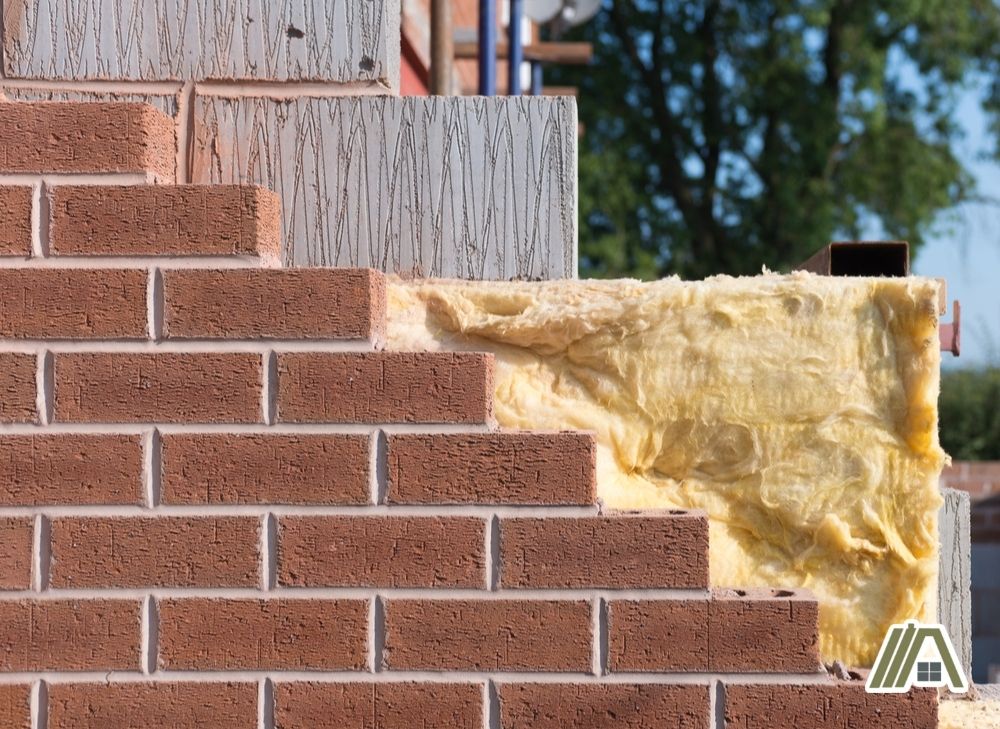
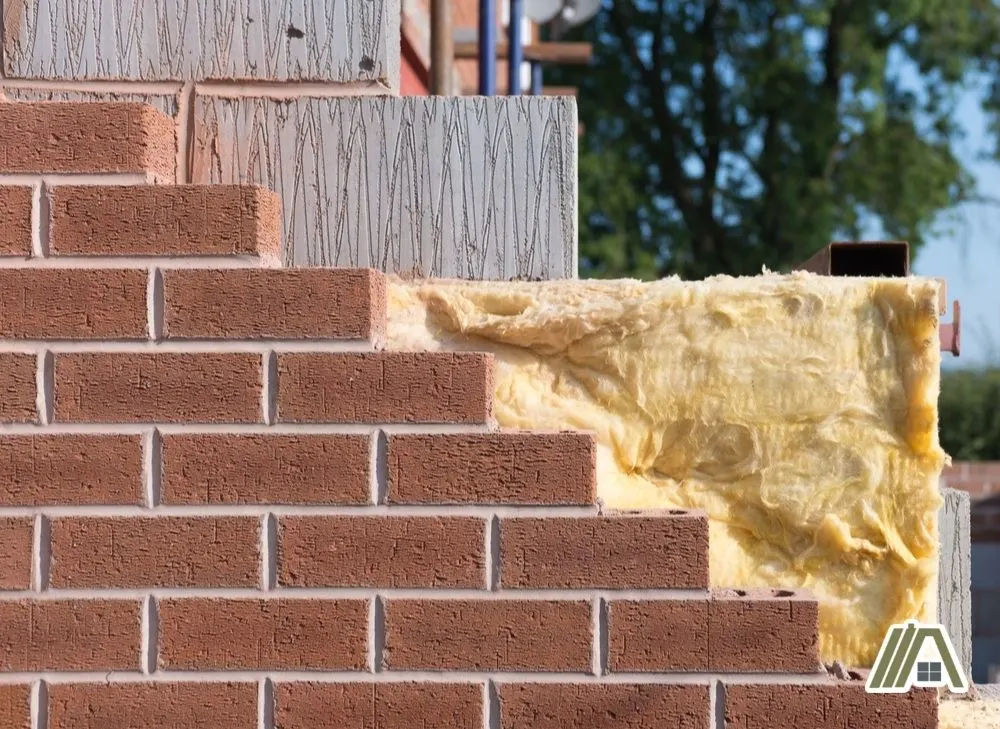
Cellulose slows airflow down more than than fiberglass does, but neither are effective plenty to be considered a vapor barrier. Thus, a plastic vapor barrier must live used inwards addition to insulation in gild to make a proper barrier against moisture.
If a proper vapor barrier is not acquaint, wet can drive problems within the insulation itself by lowering its ability to properly regulate the temperature of your dwelling.
The wet could too migrate all the way through the insulation and movement damage to the drywall and forest framing of the family.
A 3rd relevant outcome is the growth of mold.
Installing a vapor barrier is the easiest style to preclude moisture in the air from causing impairment to your home.
Do’sec of Covering Insulation alongside Plastic
Install Plastic on the Inside
You should install plastic on the within of the insulation. During colder months, the within of the insulation is the warmer side. If warm air is allowed to die through the insulation, it will gradually go colder every bit it travels to the exterior of the house.
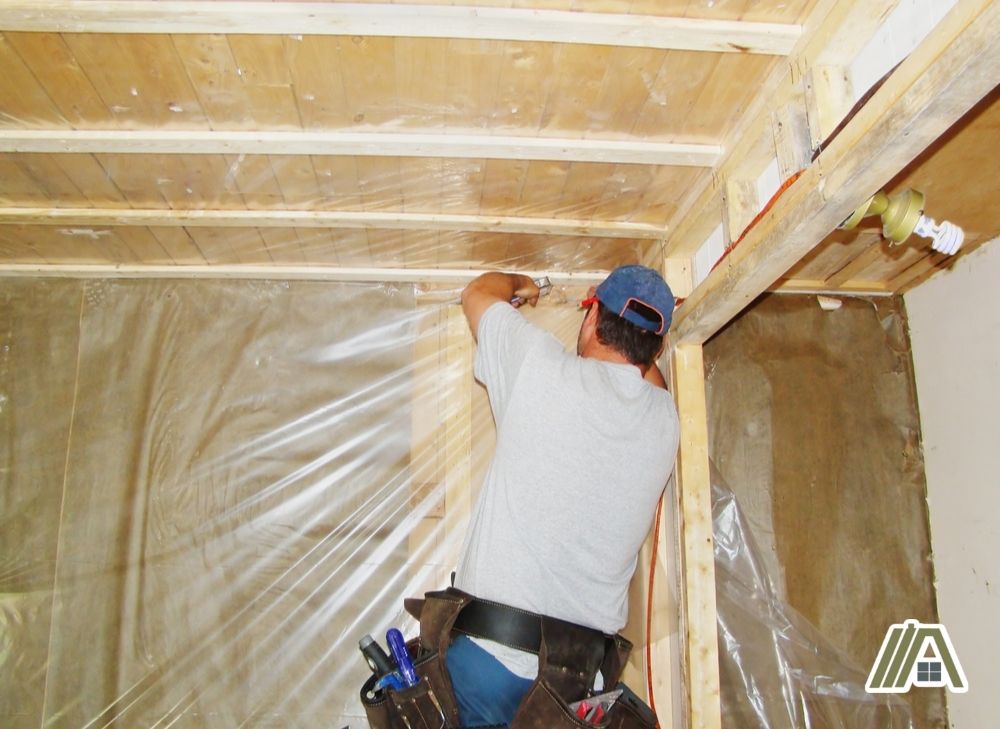
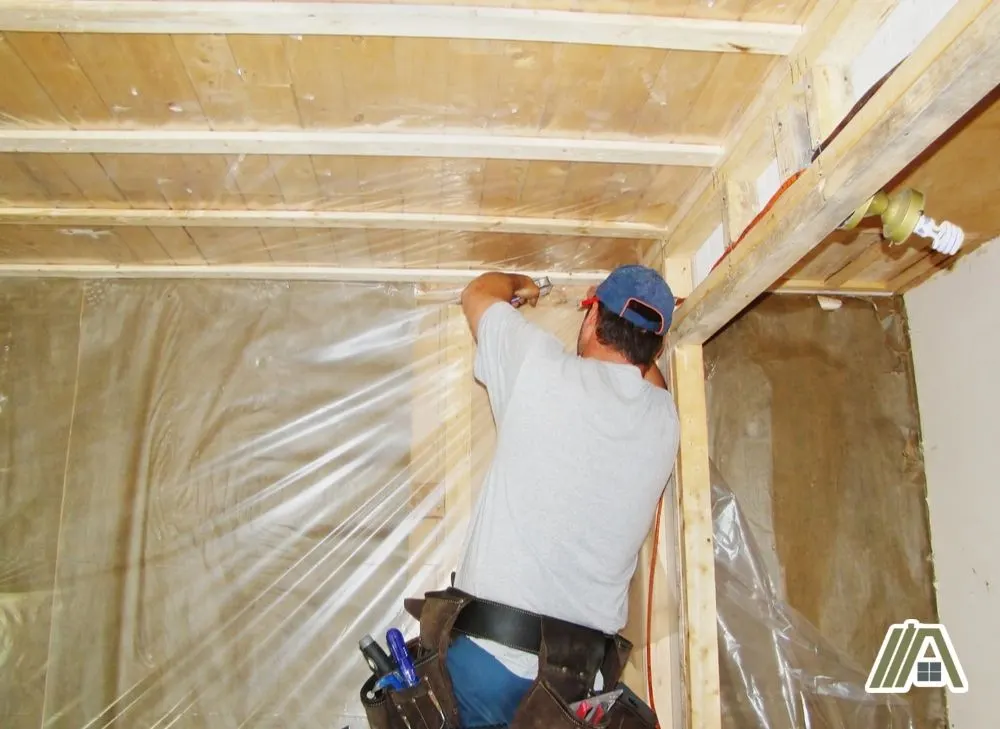
Cold air is non able to concord as much moisture equally warm air, then close to of the moisture that was previously carried equally H2O vapor will condense into liquid water. The cool air then exits through the walls too leaves condensation behind.
The condensation has effectively come into contact alongside your insulation and volition now beginning doing harm to the insulation as well as surrounding materials.
This whole procedure is prevented by installing a vapor barrier on the interior side of the insulation. If the warm air cannot die through the walls inwards the showtime home, it cannot cool down in addition to leave condensation behind.
You make non postulate to install plastic on the outside side because it is protected past the waterproofing of the actual family. This waterproofing already serves as a vapor barrier for the insulation.
Choose the Correct Product
When looking into what vapor barrier you should become, there are a few primal differences among materials that you should be aware of.
The effectiveness of a vapor barrier is measured past its H2O vapor transmission charge per unit, more merely known as permeance.
Water vapor permeance is technically defined every bit nanograms of H2O vapor per instant per square meter per Pascal (ng/(Pa·second·m2). We’re going to use the simpler unit of measurement “perms” to categorize vapor barriers.
The International Residential Code (IRC) separates vapor barriers into iii classes (Class I, II, in addition to III) depending on their permeance.
Class I vapor barriers are rattling resistant to diffusion of water vapor. They must accept a permeance of 0.i perms or less. Examples of Class I vapor barriers include:
- Sheet polyethylene
- Sheet metallic
- Non-perforated aluminum foil
- Foil scrim kraft paper-backed aluminum
Class II vapor barriers must take a permeance of greater than 0.one perms in addition to less than one.0 perm. Examples of Class II vapor barriers include:
- Asphalt-impregnated or asphalt-coated kraft paper
- Unfaced expanded polystyrene
- Fiber-faced polyisocyanurate
Note: Some insulation types act every bit Class II vapor retarders, e.g., rockwool in addition to kraft-faced fiberglass batts.
Class III vapor barriers must accept a permeance betwixt ane.0 perm and x perms. Examples of Class III vapor barriers include:
- Latex or enamel pigment
- Gypsum board
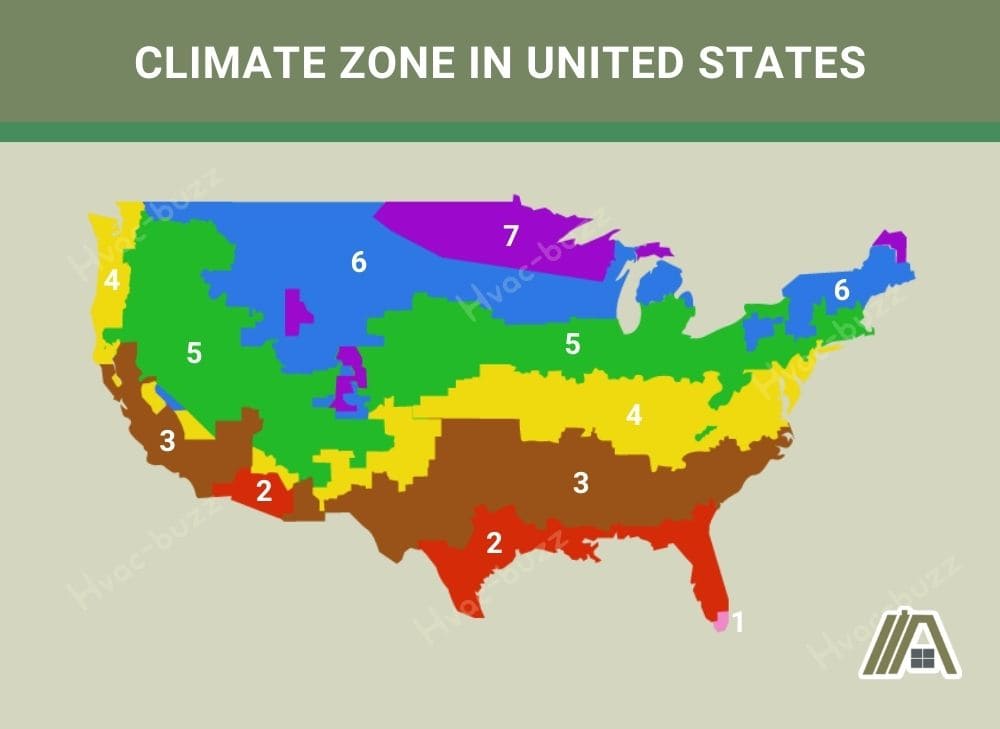
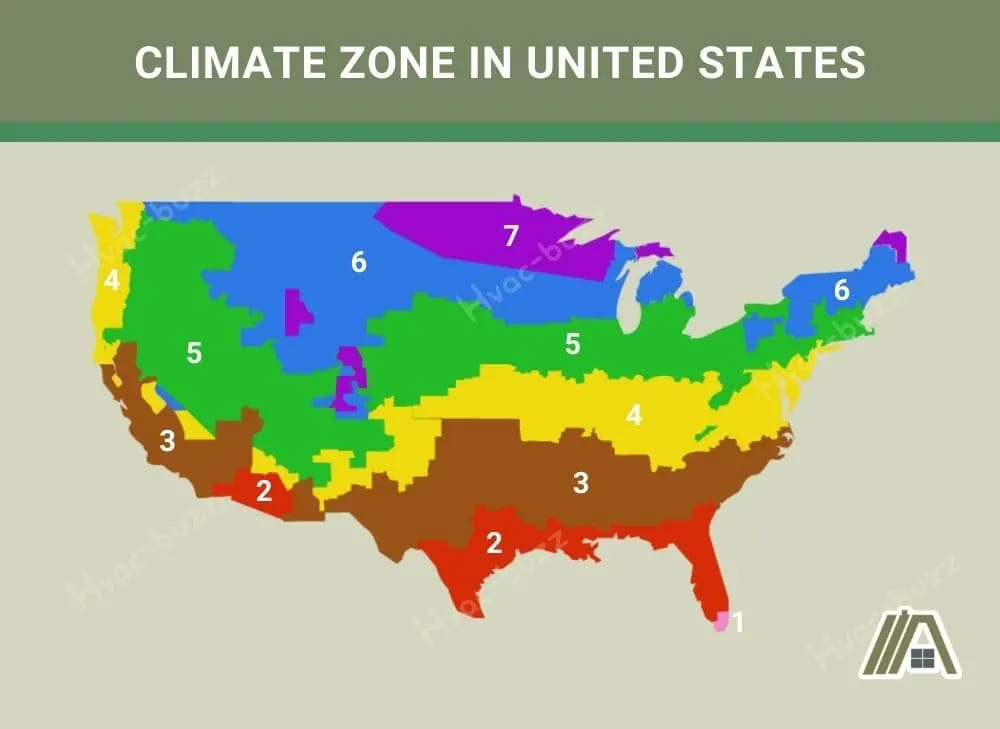
The type of vapor barrier y'all require depends on the climate that you lot alive inwards. Section R702.7(ii) inwards the IRC contains a handy table outlining what vapor barriers are appropriate for your climate.
Get the Correct Size
The fewer folds or seams you lot ask to brand inwards your vapor barrier, the meliorate. Folds and seams are the virtually common places where vapor barriers get compromised, then limiting these areas is ideal.
To make this, y'all’ll involve to selection out a product of the correct size. Vapor barrier products are sold in a diverseness of sizes inwards shop—the most common widths existence four or six feet. With these dimensions, you should be able to work 2 sheets horizontally on the wall.
The standard wall pinnacle used to live eight feet, but at once ix-human foot ceilings are becoming increasingly mutual inward homes. And, of form, fifty-fifty taller ceilings are also institute quite ofttimes. If your ceilings are taller than 8 feet, you lot’ll desire to buy a wider curl to limit the issue of seams you’ll ask to make.
Secure the Plastic Appropriately
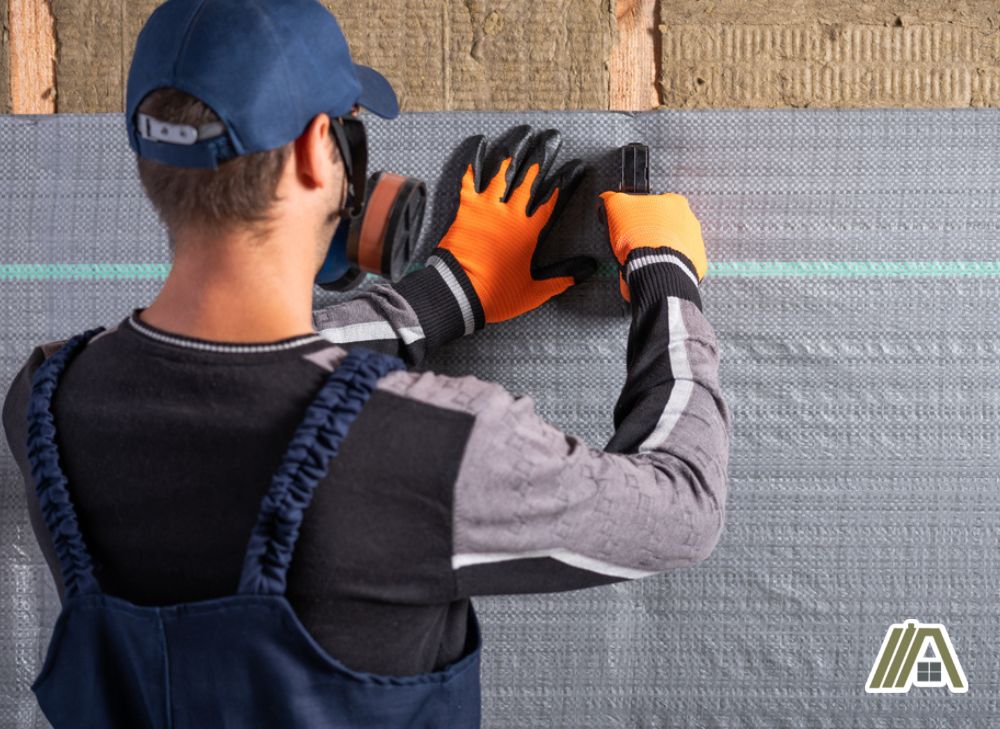
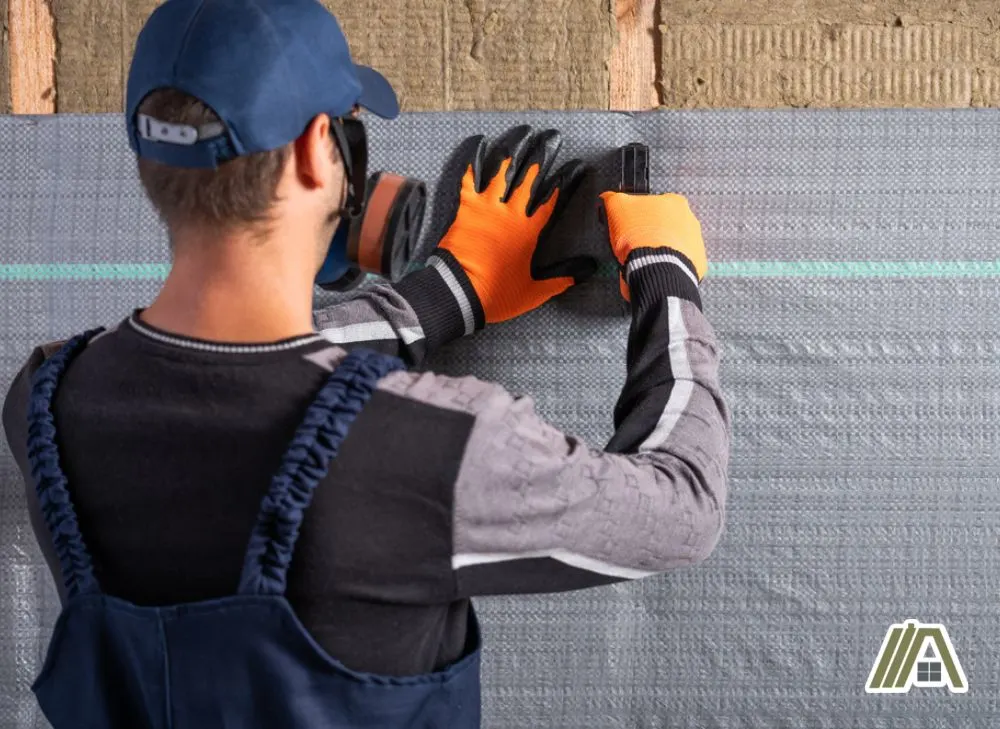
The plastic vapor barrier must live properly secured to the insulation as well as surrounding walls; if it were to detach from the surface, vapor could so die through in addition to render the vapor barrier useless.
There are 2 primary techniques used to secure vapor barriers.
The start method, which is arguably easier together with less messy, is to use tape. First, the vapor barrier should overlap at points where ii sheets connect. You tin can so purpose a ii-sided butyl tape to make an airtight seal.

The remaining complimentary border of the vapor barrier is likewise sealed amongst waterproof acrylic seam tape. Completing these steps doubly ensures that the vapor barrier is properly secured.
The instant method is to staple the vapor barrier to studs inwards the wall every 12 to sixteen inches. The staples make pocket-sized holes inwards the vapor barrier, which tin can permit air to drop dead through if they are not properly sealed. The stapled areas should be sealed amongst caulk.
You may take to purpose both staples and tape when installing your vapor barrier, every bit staples more securely attach the vapor barrier to the wall merely record is an easier and more effective sealant.
Ensure There Are No Gaps
It is of utmost importance that your vapor barrier has no gaps when it is installed, as whatever gap causes the whole projection to live unsuccessful. Vapor volition discover whatever modest open infinite inward the barrier together with come into contact alongside the insulation.
Your insulation is straightaway subject area to wet despite the rest of the vapor barrier. This pocket-sized gap will toll yous real much in the future, as the entire vapor barrier in addition to insulation may take to be redone inward extreme cases of H2O damage.
As mentioned in a higher place, it is recommended that you lot overlap the vapor barrier sheets at connectedness points. This ensures that the 2 fully encompass each other and go out no gaps in betwixt.
Don’ts of Covering Insulation amongst Plastic
Never Use Plastic on the Outside
Installing a vapor barrier on the incorrect side of the insulation tin actually movement more impairment than having no vapor barrier at all. Plastic that is installed on the outside of insulation volition trap wet instead of preventing it from entering.
The warm, moisture-filled air from inside your household is withal able to locomote through the insulation, leaving condensation behind. Now, when it gets to the outside side, the air has nowhere to go. It ends upwardly leaving fifty-fifty more wet behind every bit it is unable to escape from your walls.
A plastic vapor barrier is unnecessary on the outside of your family because contractors should take already waterproofed the outside during construction. This is a completely classify process from installing a vapor barrier for your insulation.
Avoid Using Duct Tape
Although duct record is water-resistant, it is non waterproof. Duct tape does not make an effective vapor barrier together with should not live used for the vapor barrier itself or for securing gaps between sheets of the vapor barrier fabric.
Duct tape consists of three layers: the top layer is made of polyethylene, a cloth meshing inner layer for additional force, as well as a rubber-based adhesive layer on the bottom.
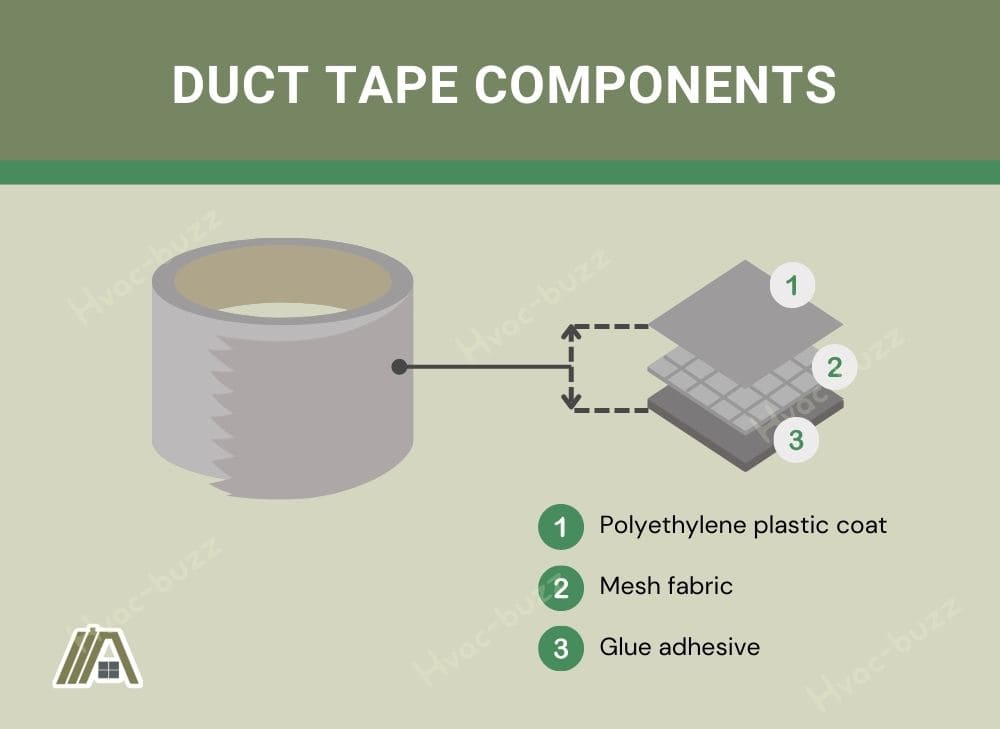
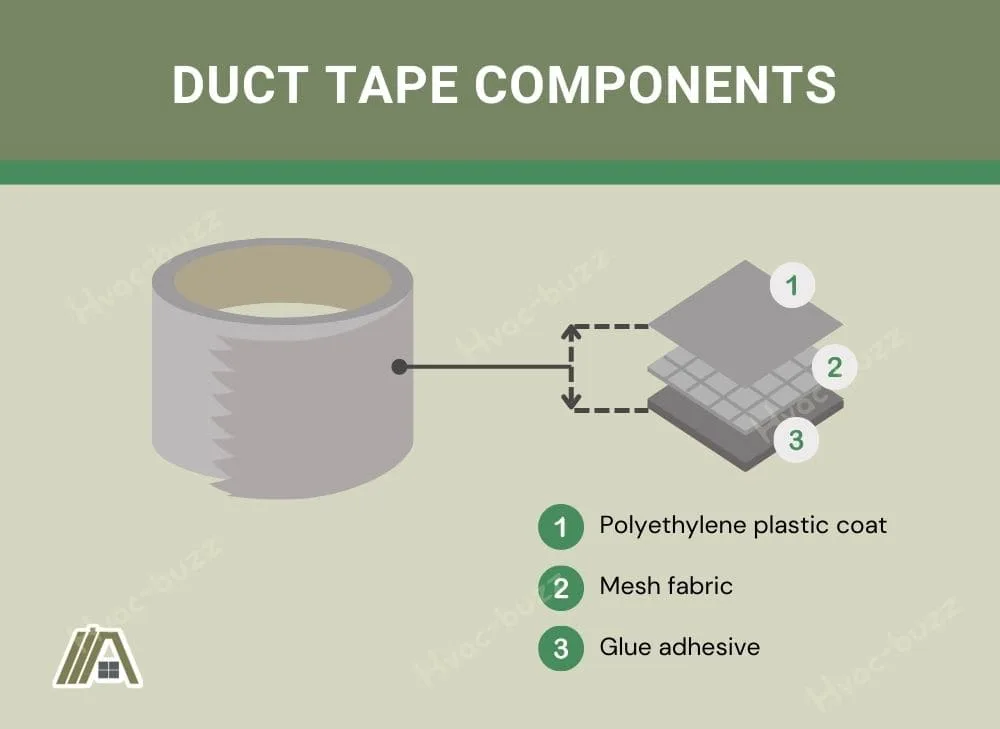
The net layer coating inwards polyethylene plastic allows duct tape to temporarily resist water penetration. However, the rubber-based adhesive is H2O-soluble. As time passes, the safe-based adhesive is degraded equally it diffuses into the water surrounding it.
The duct tape will eventually detach from the surface. For permanent projects that come up into contact with water (such equally installing a vapor barrier), duct record is not the correct choice.
Instead, particularly formulated sealing record should live used equally it is made amongst an adhesive that is H2O-insoluble.
Never Cover Insulation That Is Already Wet
It is never a practiced idea to cover insulation that is already wet. Now, the vapor barrier will proceed inward moisture instead of keeping it out!
If your insulation is wet, y'all accept a few options; y'all may be able to permit it dry before you lot install it, but if it is completely soaked you lot may involve to purchase novel insulation. If the insulation is non fully dry out when it is installed inwards your home, it becomes a wellness gamble in addition to structural danger.
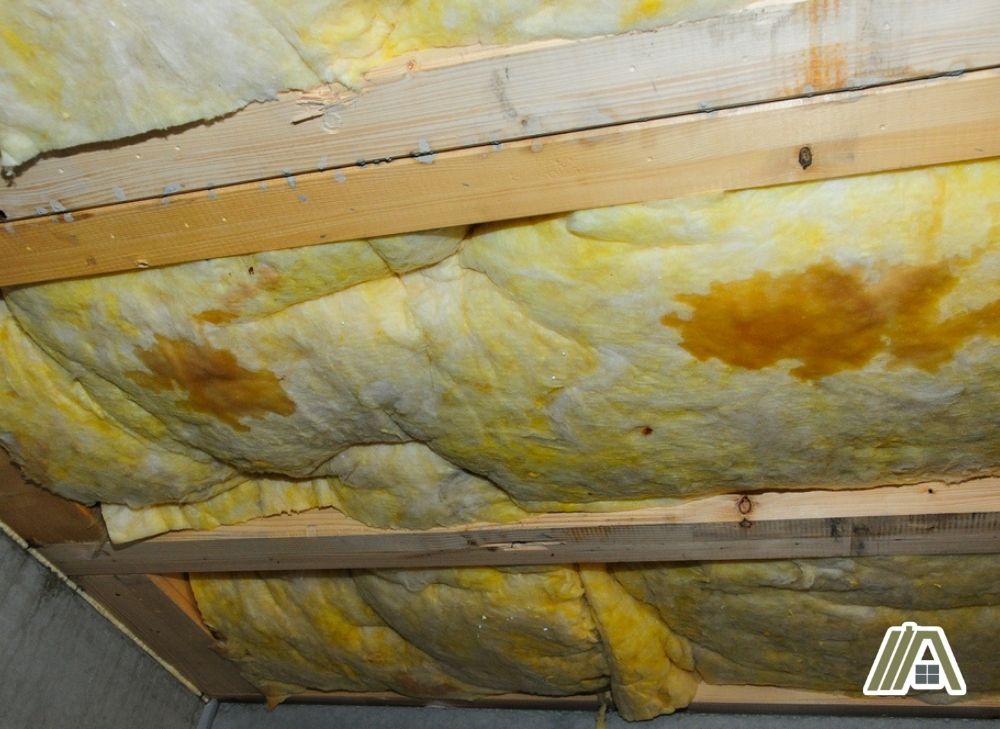
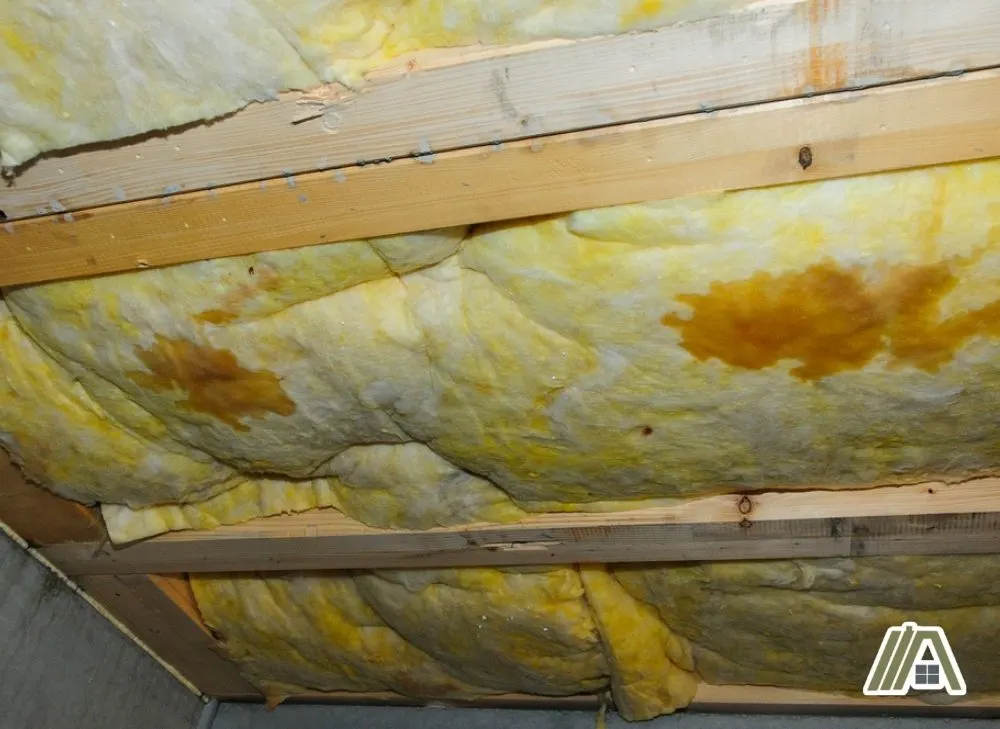
Since the vapor barrier is made to not allow wet to locomote through it, the wet found inwards the insulation will take nowhere to get.
The lack of airflow, inwards improver to nighttime, damp, too perchance warm weather, is ideal for mold growth. Mold is a health hazard every bit it tin Pb to respiratory issues, cognitive difficulties, too organ harm.
Wet insulation is likewise worse at insulating your dwelling house. Energy employment together with costs volition increase if your insulation is filled alongside wet.


Komentar
Posting Komentar